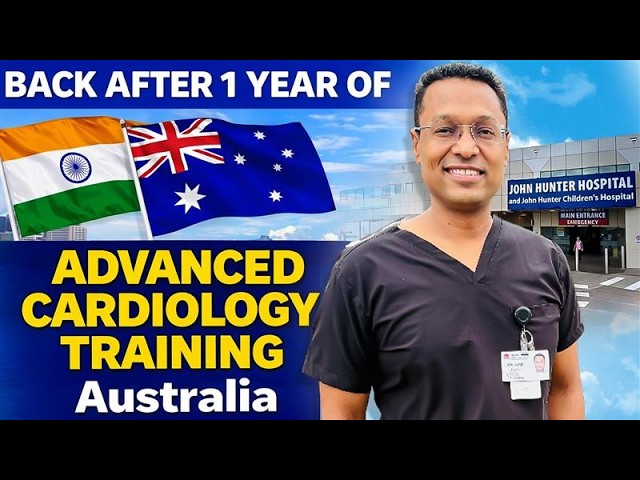
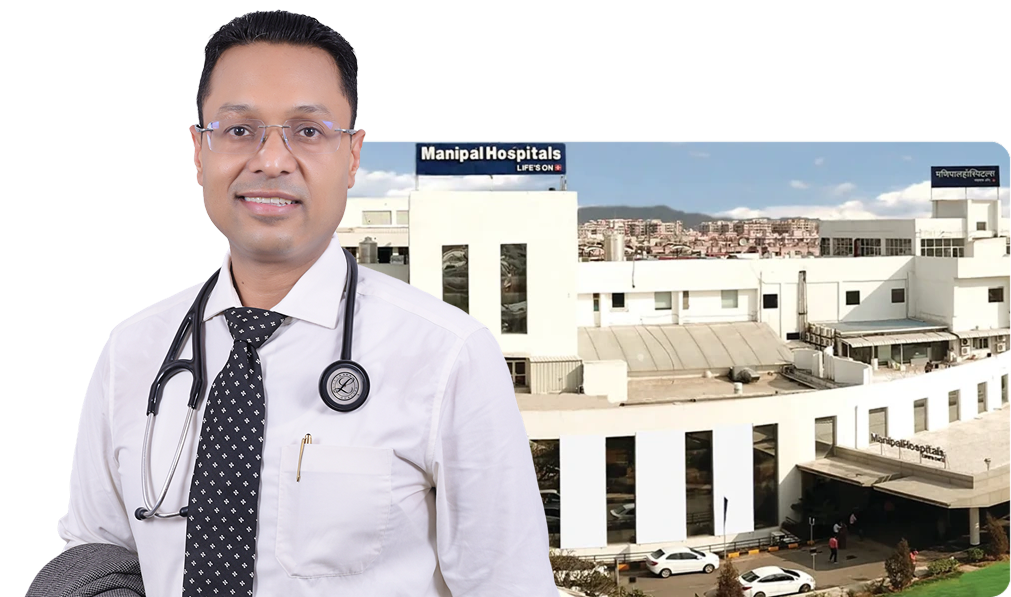
Dr. Amit Gupta is currently serving as a Fellow in Cardiology at John Hunter Hospital / Hunter New England Local Health District, Newcastle, Australia from February 2025 to February 2026. John Hunter Hospital is a renowned tertiary referral center and one of the largest teaching hospitals in New South Wales, known for its cutting-edge cardiology and interventional programs.
By completing this fellowship at John Hunter Hospital, Australia, Dr. Gupta strengthens his role as one of the few cardiologists in India with extensive global exposure in advanced structural heart interventions.
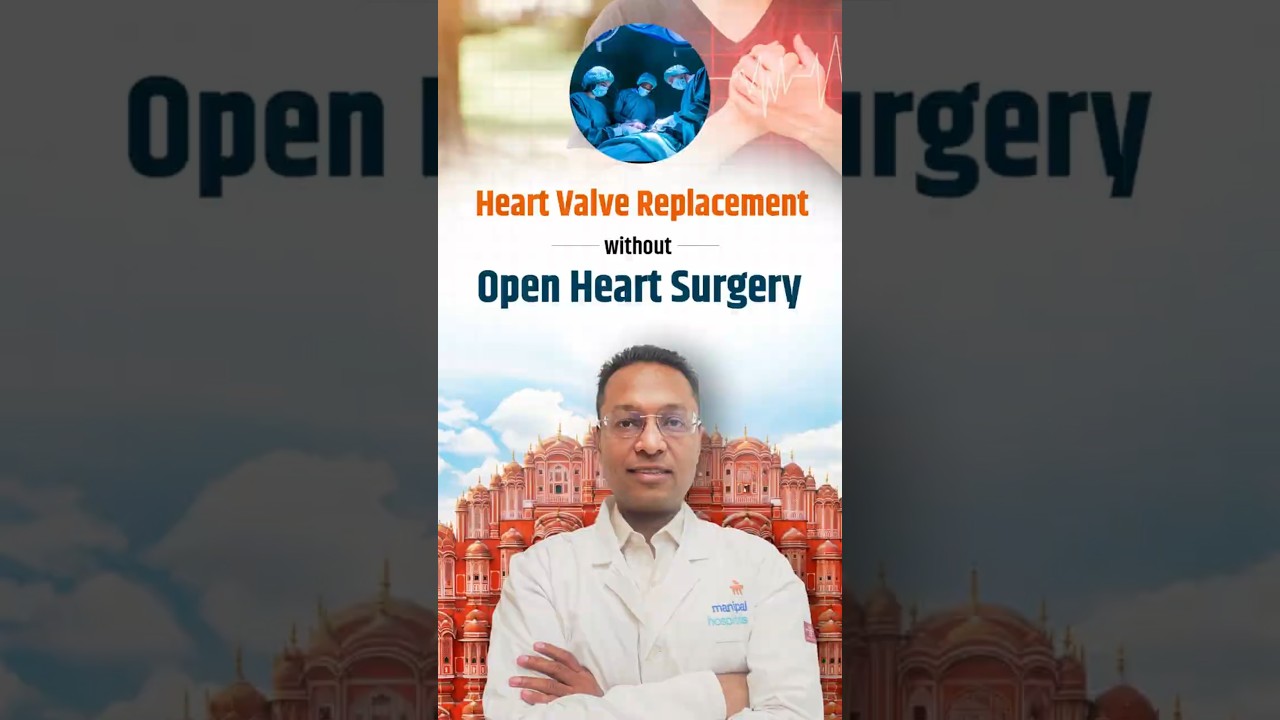
This specialized fellowship ensures that Dr. Amit Gupta brings world-class expertise in minimally invasive valve therapies to India, offering patients safer, faster-recovery alternatives to open-heart surgery.
Dr. Amit Gupta has undergone extensive training in structural heart interventions at leading international and national centers of excellence.
In May 2024, Dr. Amit Gupta completed a focused TAVI Observership at Karolinska University, Stockholm, Sweden, under the guidance of Dr. Nawzad Saleh, a leading authority in transcatheter valve therapies in Europe.
This exclusive observership offered in-depth exposure to advanced techniques in Transcatheter Aortic Valve Implantation (TAVI), patient selection protocols, imaging-based procedural planning, and real-time decision-making in complex valve cases.
At SafeHeart, we take pride in offering advanced heart valve treatments led by highly trained specialists. Our expert, Dr. Amit Gupta, has been internationally recognized for his skills in Transcatheter Aortic Valve Implantation (TAVI) and Transcatheter Mitral Valve Replacement (TMVR).
Dr. Gupta successfully attended the prestigious PCR London Valves Fellowship Courses in London, UK (2023).
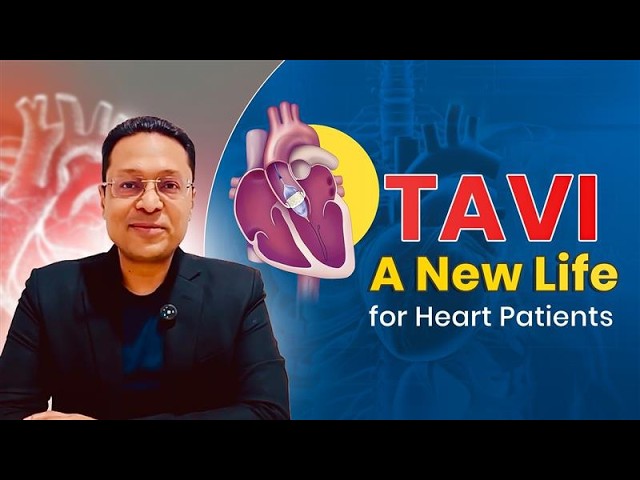
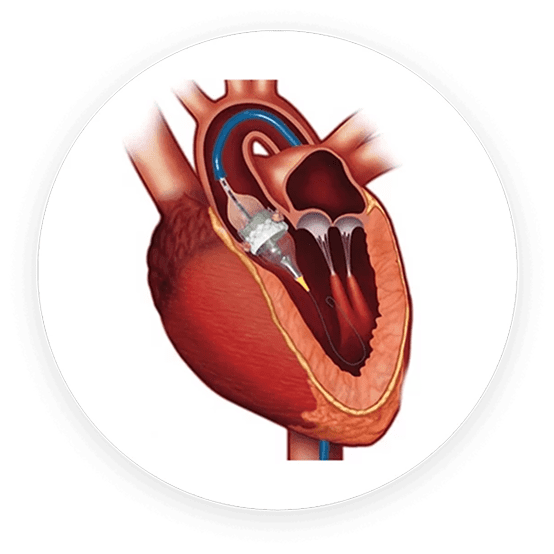
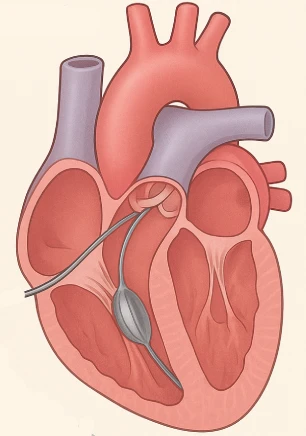
This is a minimally invasive procedure, and our expert TAVI doctor in Indore performs it using a thin, flexible tube called a catheter. The catheter is typically threaded through a large blood vessel and gently maneuvered to the heart. Using advanced imaging, the doctor releases the catheter to implant a replacement valve directly inside the narrowed aortic valve.
Once in place, a new artificial valve is inserted and expanded within the old, damaged one. The new valve begins working right away, so the patient has normal blood flow without having to have the old valve removed. This state-of-the-art procedure done at a reputed TAVI hospital in Indore will speed up recovery, minimize discomfort, and risk compared to the traditional open-heart approach.
A TAVI doctor in Indore recommends TAVI as a quick, minimally invasive replacement for open-heart surgery for patients suffering from aortic valve disease. The contrast will show you why TAVI is a safer and quicker recovery than conventional treatment.
| Aspects | TAVI | Open Heart Surgery |
|---|---|---|
| Blood Flow Restoration | The new valve kicks into action as soon as it’s implanted, which means blood starts flowing better straight away. | The blood flow improves with time, the further healing advances. |
| Wound & Recovery | Requires just a tiny incision in the leg and leaves barely a scar; patients in this condition recover faster. | Requires a large chest incision that requires more recovery time and has a scar. |
| Risk of Complications | Reduced risk of stroke or heart damage because the heart is not being handled as much during surgery. | Increased risk of complications due to the extensive operation |
| Post-Procedure Care | Shorter hospital stays and somewhat uncomplicated follow-up checks. | More prolonged hospitalization and shorter term of follow-up care. |
| Future Treatment Options | Easier to do the same valve replacement again if it is needed in the future. | In this, repeat surgeries are more complex and dangerous. |
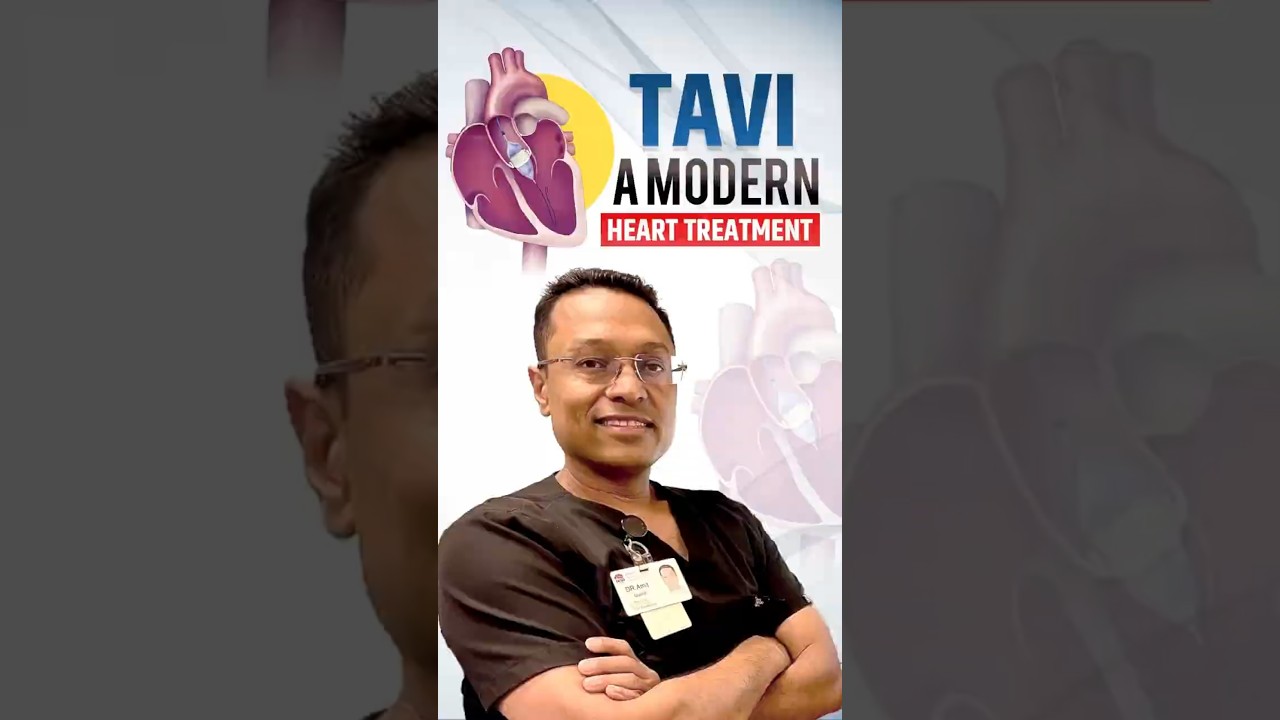
TAVI (Transcatheter Aortic Valve Implantation) is a modern, minimally invasive technique to replace the damaged aortic valve without open-heart surgery. It's a good option for elderly people or high-risk patients who are not surgical candidates for valve replacement. TAVI surgery in Indore is performed by expert doctors like Dr. Ankit Gupta who are using state of the art imaging and precision-based methods for a safe and successful procedure.
Before the treatment, a TAVI expert in Indore carries out comprehensive screening with echocardiography, CT imaging, and its evaluation, as well as heart catheterisation. These tests decide the level of severity of aortic stenosis and will verify whether this operation is applicable for the patient or not in case of TAVI surgery in Indore.
The cardiologist determines the best path to the heart, which is often through the femoral artery in the groin. In some patients, a small incision may need to be made in the chest. This method does not require the opening of the chest, and helps patients to recover earlier after TAVI surgery in Indore.
A thin, stent-like catheter containing the new valve is maneuvered through an artery and up to the ailing aortic valve. During TAVI surgery in Indore, which is advanced imaging machines help the experts to guide the catheter precisely to its place with a very high degree of precision.
Once the catheter is inside the heart, the new valve is placed within the old one. It is then implanted undersized, inflated to optimal size rung (balloon), or deployed self-expanding and displaces the calcified valve leaflets. This vital step re-establishes smooth blood flow from the heart to the body.
If the new valve is properly positioned, it starts working right away. This TAVI doctor in Indore confirms it is comfortably placed and functioning correctly before finalizing the procedure, promising excellent results.
Patients are observed in the TAVI hospital in Indore for a very short duration. For the majority, there is a swift resolution with recovery of heart function and, in most cases, symptom resolution. TAVI Doctor in Indore customizes aftercare instructions to help ensure your heart and the new valve work properly for years to come.
DM - Cardiology (G. B. Pant Hospital, Delhi)
Fellow SCAI (USA), MD (Medicine), MBBS
10+ Years Of Experience in Intervention Cardiology
Dr. Amit Gupta TAVI doctor in Indore, is a young and talented Interventional Cardiologist in Jaipur. He is currently associated with CK Birla Hospital, Jaipur, as a Senior Additional Director in the Cardiology Department. His training in cardiology and cardiac intervention is from the most esteemed cardiac center in India (G. B. Pant Hospital, MAMC, New Delhi). His specialization is in Pacemaker, ICD, CRT implantation, Balloon Valvoplasty, Peripheral angioplasty, Percutaneous ASD, PDA device closure, and diagnostic Electrophysiology study. Additionally, Dr. Amit Gupta stands out as one of the most trusted and renowned TAVI doctor in Udaipur with more than 10 years of extensive experience. With TAVI treatment, he successfully transformed many patients' lives from severe heart disease, especially aortic stenosis. What sets Dr. Amit Gupta apart from other doctors is that he has a centred approach, and he aims to provide the best cardiac care using modern treatments like TAVI, which is less invasive.
TAVI is undertaken without opening the chest or stopping the heart, so it’s much kinder on the body. It makes it easier for patients to recover than with open-heart surgery, with less pain and strain.
Because the procedure is less invasive, patients tend to be able to go home after a few days. They recover more rapidly and are back to business as usual much faster.
Because the procedure involves a small catheter rather than large incisions, there’s less risk of an infection, bleeding or other post-surgical complications. It also decreases the amount of blood transfused.
Blood flows properly once the new valve is in place, relieving symptoms such as chest pain and shortness of breath. The majority of patients have more vitality and energy after they are well.
Dr. Amit Gupta is the TAVI Doctor in Indore who is extremely proficient in TAVI treatment. Using the best possible approach to treatment with the most satisfactory results possible to ensure that both improve your comprehensive health/quality of life and the health of your heart, he focuses on patient-centered approaches with the best available treatment options. So, let’s take a look at a few of the reasons why you selected Dr. Amit Gupta for the following heart problem conditions:
1
He is an expert at managing high-risk, elderly, and frail patients, and he takes a very measured, evidence-based approach, so complications are minimal and recovery maximized
2
Dr Amit Gupta, who provides TAVI surgery in Indore, operates on his patients with full advanced technology. He has a modern cardiac centre which provides advanced treatment from high-end Cath labs to an advanced imaging system.
3
You do not have to pay a lot for good heart care. Dr. Amit Gupta, a TAVI doctor in Indore, provides premium TAVI treatment that is affordable to anyone. He would like everyone to be able to get the best care without having to think too much about the price of treatment.
4
The state-of-the-art infrastructure, skilled and compassionate staff make Dr. Amit Gupta's TAVI hospital in Indore a one-stop place for consultation and procedure, besides
It depends. TAVI valves last around 10–15 years. For an elderly patient, that’s usually enough for life. Younger patients may need a repeat procedure later, but often that can be done with another TAVI instead of open surgery.
Yes, because if the patient wants success and long-term benefit, he must follow the standard lifestyle, which comes with physical activities, exercise, a balanced diet, food, and medication.
TAVI is usually performed under local anaesthesia, giving patients the ability to remain comfortable during the procedure. Patients experience few side effects, and recovery is faster than with open-heart surgery. Dr. Ankit Gupta, whose TAVI hospital in Indore gives every possible comfort to the patient.
Yes, TAVI patients are most commonly placed on blood thinners as well as other medications after the procedure to prevent clotting and help return the heart to regular function. TAVI specialist in Indore informed the patient that they have to continue with the medicines & follow the advice regularly so that the heart keeps itself fit and healthy.
While TAVI was first designed for elderly patients or those with high risk, it is now being evaluated among younger people who prefer a less invasive procedure. But as a cardiologist, there is careful evaluation of valve durability, lifestyle, and the prospects for future re-intervention before making such recommendations.
There is no significant scar remaining following TAVI. The procedure creates only a small puncture, often near the groin, that closes in several days with barely a visible reminder.
As per a TAVI specialist in Indore, many patients can sit on the edge of the bed and begin walking as soon as 24 hours following surgery. Early mobility is encouraged to help heal faster and avoid complications such as blood clots.