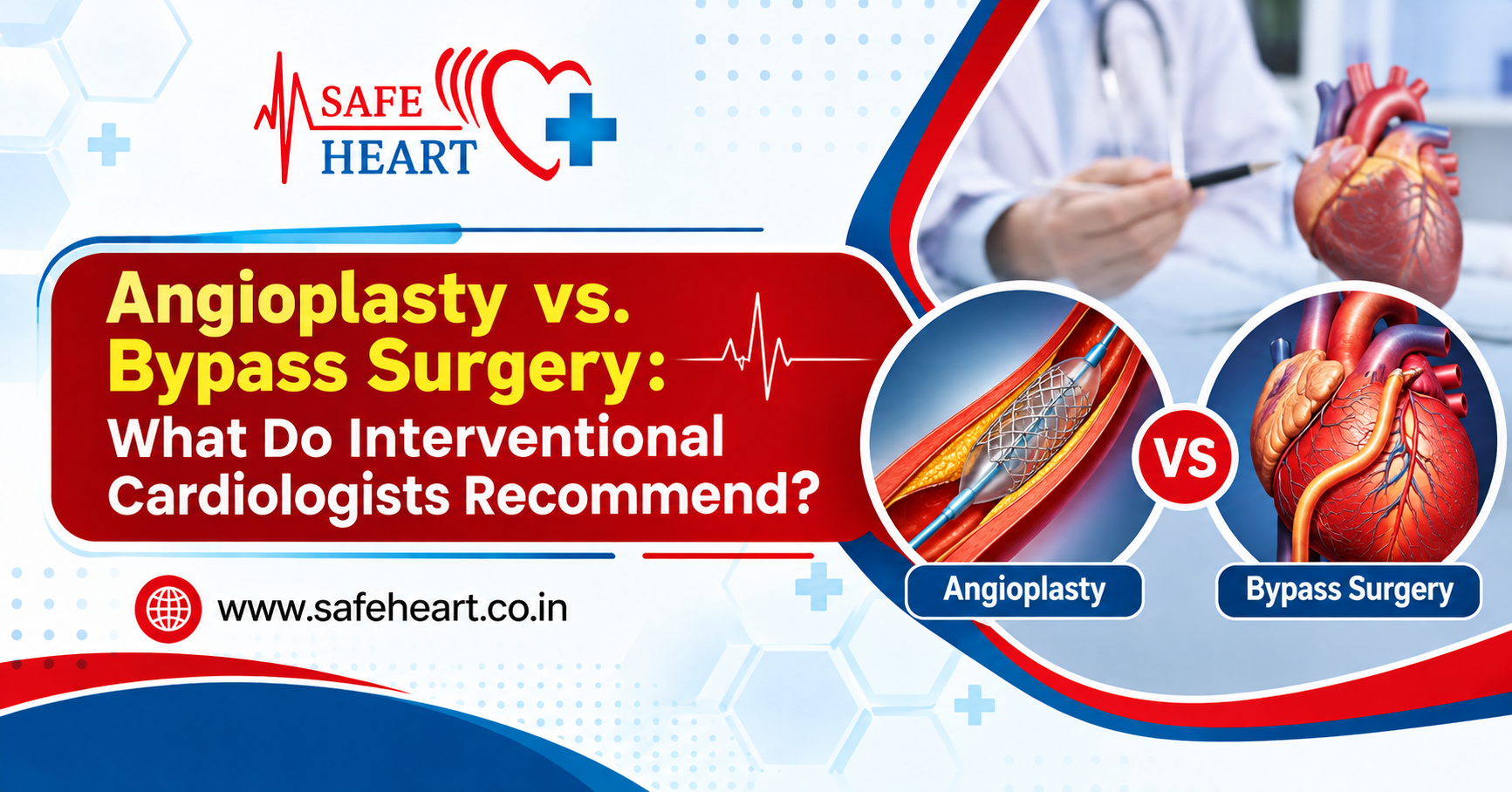
Angioplasty vs. Bypass Surgery: What Do Interventional Cardiologists Recommend?
When faced with severe coronary artery disease (CAD), one of the most critical decisions patients and their families encounter is choosing between Angioplasty (Percutaneous Coronary Intervention – PCI) and Bypass Surgery (Coronary Artery Bypass Grafting – CABG).
Both procedures are designed to restore blood flow to the heart, relieve symptoms like chest pain (angina), and reduce the risk of a heart attack. However, the path to recovery, surgical invasion, and suitability varies significantly between the two.
Here is an evidence-based breakdown from an Interventional Cardiologist in Jaipur on how specialists determine the right procedure for your heart.
What is Angioplasty (PCI)?
Angioplasty is a minimally invasive catheter-based procedure performed to open blocked or narrowed coronary arteries.
During an angioplasty:
-
A thin, flexible tube (catheter) is inserted through a blood vessel in your wrist or groin and guided to the blocked heart artery.
-
A small balloon is inflated at the site of the blockage to push plaque against the artery wall.
-
A tiny mesh tube called a drug-eluting stent is placed to keep the artery open permanently.
Key Advantages of Angioplasty:
-
Minimally Invasive: Requires no open-chest incisions.
-
Faster Recovery: Most patients return home within 24–48 hours and resume normal daily activities within a week.
-
Local Anesthesia: Reduces risks associated with general anesthesia.
What is Bypass Surgery (CABG)?
Bypass Surgery is a major open-heart surgical procedure. Instead of unblocking the existing artery, surgeons create a new pathway (detour) for blood to flow around the blocked area.
During CABG:
-
A healthy blood vessel is taken from another part of the body (usually the chest wall, leg, or arm).
-
The vessel is grafted onto the coronary artery above and below the blockage.
Key Advantages of Bypass Surgery:
-
Long-Term Durability: Highly effective for severe, widespread multi-vessel disease.
-
Comprehensive Detour: Ideal when arteries are calcified or completely occluded over long segments.
Angioplasty vs. Bypass Surgery: Direct Comparison
| Feature | Angioplasty (PCI) | Bypass Surgery (CABG) |
| Invasiveness | Minimally invasive (catheter-based) | Major open-heart surgery |
| Anesthesia | Local anesthesia | General anesthesia |
| Hospital Stay | 1 – 2 days | 5 – 7 days |
| Recovery Time | 3 – 7 days | 6 – 8 weeks |
| Ideal For | 1 to 2 vessel blockages, acute heart attacks | Complex 3-vessel disease, diabetic patients |
How Do Cardiologists Decide Which Procedure You Need?
Choosing between Angioplasty and Bypass Surgery is not a matter of preference—it is based on clinical guidelines, advanced imaging, and individual risk factors. Consulting a qualified Heart Specialist in Jaipur ensures a personalized treatment strategy using international scoring systems.
1. Number and Location of Blockages
-
Single or Double Vessel Disease: Angioplasty is generally the preferred, less invasive option.
-
Triple Vessel Disease or Left Main Artery Blockage: Bypass surgery often provides better long-term outcomes, especially if the blockages are intricate.
2. Presence of Diabetes
Clinical trials consistently show that diabetic patients with multi-vessel blockages tend to have better long-term survival rates and fewer repeat procedures with Bypass Surgery compared to standard stenting.
3. Patient Age and Overall Health
For elderly patients or individuals with major co-existing medical conditions (such as severe lung or liver disease), the lower physical strain of angioplasty makes it a safer alternative to major surgery.
4. Emergency Situations (Heart Attack)
During an active heart attack (STEMI), speed is critical. An emergency procedure like Coronary Angioplasty in Jaipur is the gold-standard treatment to clear the blockage within minutes and preserve heart muscle function.
Modern Advances in Interventional Cardiology
Recent technological advances have made stenting safer and more precise than ever. Today, interventional cardiologists utilize IVUS (Intravascular Ultrasound) and OCT (Optical Coherence Tomography)—high-definition imaging inside the artery—to precisely size and deploy stents, closing the gap in long-term durability between angioplasty and surgery.
Frequently Asked Questions (FAQs)
Q1. Is Angioplasty safer than Bypass Surgery?
Angioplasty carries lower immediate risks of surgical complications, infection, and blood loss because it is minimally invasive. However, overall safety depends on the patient’s individual heart function and medical history.
Q2. Can blockages return after Angioplasty?
Modern drug-eluting stents (DES) significantly reduce the chance of re-blockage (restenosis) to less than 5–10%. Adhering to prescribed medications and lifestyle changes minimizes this risk further.
Q3. How do I know which procedure is right for me?
A comprehensive evaluation including an Electrocardiogram (ECG), Echocardiogram, and Coronary Angiogram is necessary. Your cardiology team will discuss the findings to recommend the safest and most effective plan for your long-term health.
Q4. Can a patient undergo Angioplasty after a previous Bypass Surgery?
Yes. If a graft from a previous bypass surgery develops a blockage over time, an interventional cardiologist can perform angioplasty on the grafted vessel or native coronary arteries to restore smooth blood flow without repeating open-heart surgery.
Q5. What is the average hospital stay after Angioplasty vs. Bypass Surgery?
After an angioplasty, patients are typically discharged within 24 to 48 hours. In contrast, recovery after Bypass Surgery requires a hospital stay of 5 to 7 days, including monitoring in the Intensive Care Unit (ICU).
Q6. Is age a limiting factor for choosing between Angioplasty and Bypass Surgery?
Age alone does not decide the procedure. However, for elderly patients or individuals with higher surgical risks, minimally invasive angioplasty is often preferred over open-heart surgery due to faster healing and lower physical stress on the body.
Q7. How long do stents last after an Angioplasty?
Modern drug-eluting stents (DES) are designed to remain permanently inside the artery. With prescribed blood-thinning medications, routine follow-ups, and proper lifestyle adjustments, stents can keep blood vessels open for a lifetime.
Q8. What post-procedure precautions should heart patients follow?
Whether undergoing PCI or CABG, patients must follow prescribed medications (like antiplatelets and statins), adopt a heart-healthy diet low in saturated fats, engage in cardiac rehabilitation or light walking, and strictly avoid tobacco.