


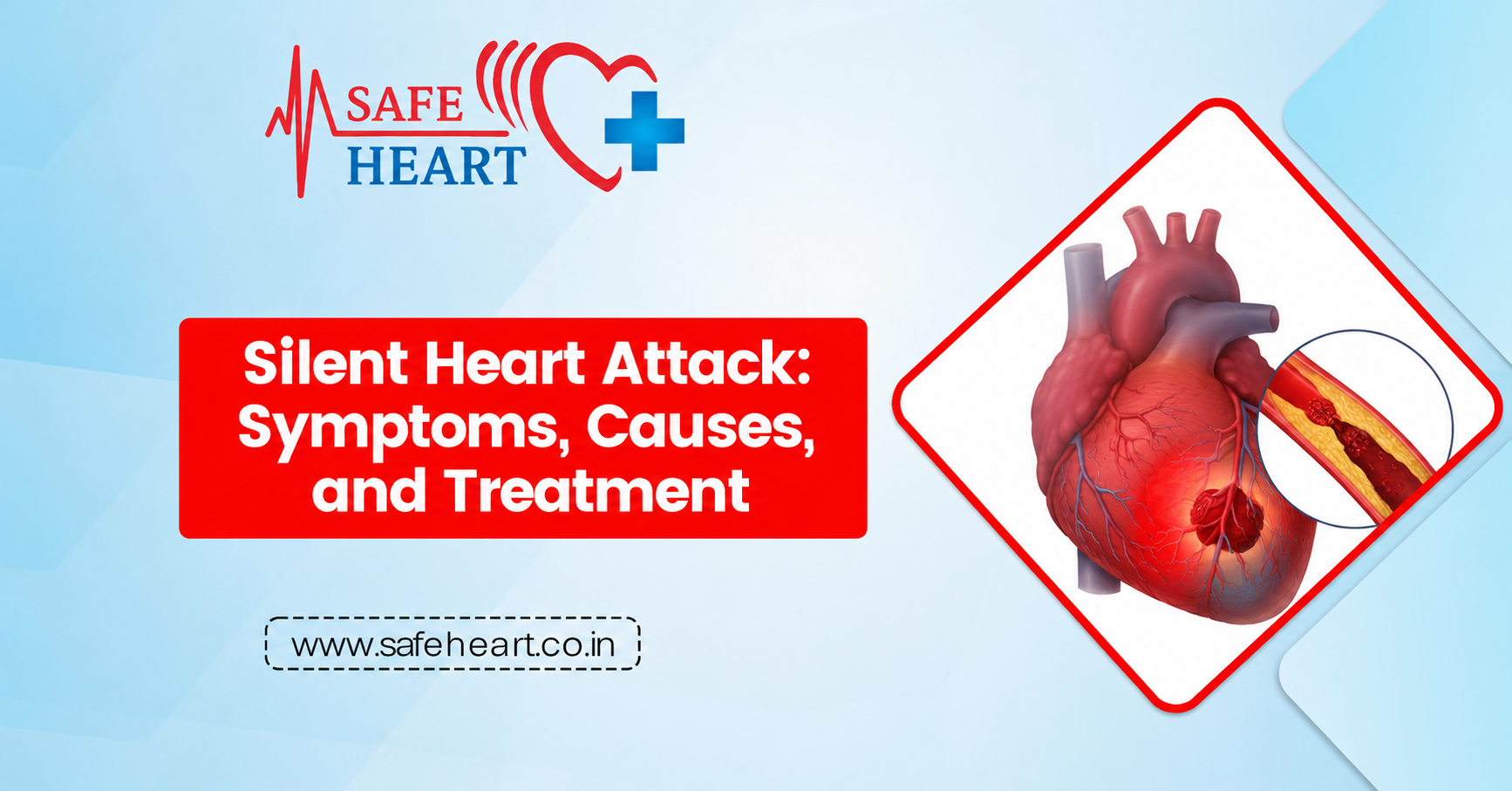
Silent Heart Attack: Symptoms, Causes, and Treatment
Introduction
Most people imagine a heart attack as a dramatic event — sudden chest pain, collapsing to the floor, rushing to the hospital. But a large number of heart attacks don’t happen this way at all. They happen quietly, without warning, and without the person even realising it. This is what doctors call a silent heart attack, and it can be just as dangerous as a “typical” one, sometimes even more so, because it often goes undiagnosed until much later.
Studies suggest that nearly 45% of heart attacks are silent, meaning the person experiences little to no noticeable symptoms. The damage still happens to the heart muscle, but because there’s no dramatic warning sign, many people never get checked, and the underlying problem keeps getting worse.
In this blog, we’ll break down what a silent heart attack really is, why it happens, how to recognise the subtle warning signs, and what treatment options are available — explained in simple terms so you can protect yourself and your loved ones.
What Is a Silent Heart Attack?
A silent heart attack, medically known as a Silent Myocardial Infarction (SMI), occurs when the blood supply to a part of the heart muscle is blocked or reduced, just like in a regular heart attack, but the symptoms are so mild or unusual that they go unnoticed or get mistaken for something else, like indigestion, muscle strain, or fatigue.
The heart muscle can still get damaged during a silent heart attack. The difference is only in how the body responds and how visible the symptoms are, not in how serious the event is. In fact, silent heart attacks are often discovered only later, during a routine ECG or health check-up, when the doctor notices old scar tissue on the heart that the patient was never even aware of.
Why Are Silent Heart Attacks So Dangerous?
The real danger of a silent heart attack lies in the delay. Because there is no obvious emergency, people don’t rush to a hospital, and the heart doesn’t get timely treatment. This delay can lead to:
- Permanent damage to a larger portion of the heart muscle
- A higher risk of a second, more severe heart attack
- Increased chances of developing heart failure over time
- Irregular heart rhythms (arrhythmias)
- Higher long-term risk of sudden cardiac arrest
This is exactly why regular heart check-ups matter, even if you feel perfectly fine. Waiting for pain to guide your decisions can be a costly mistake when it comes to heart health.
Symptoms of a Silent Heart Attack
Since silent heart attacks don’t come with the classic crushing chest pain most people expect, the symptoms are often subtle and easy to brush off. Some common signs include:
- Mild discomfort in the chest that feels like pressure, tightness, or fullness rather than sharp pain
- Unusual fatigue that isn’t explained by lack of sleep or exertion
- Shortness of breath, especially during light activity or while lying down
- Indigestion-like discomfort, nausea, or a burning sensation that people often mistake for acidity
- Mild pain or discomfort in the jaw, neck, back, or arms
- Cold sweats without any obvious reason
- A general feeling of being unwell, without being able to pinpoint why
It’s worth noting that women, diabetics, and older adults are more likely to experience these atypical, milder symptoms rather than the classic chest-clutching pain seen in movies. If something feels off in your body, even mildly, it’s always worth getting it checked rather than assuming it will pass.
Causes and Risk Factors
The underlying cause of a silent heart attack is the same as a typical one: a blockage in the coronary arteries that reduces blood flow to the heart muscle. What changes is how the body reacts to that blockage. Several factors increase the risk of experiencing a silent heart attack:
- Diabetes – High blood sugar can damage nerves over time, reducing the body’s ability to sense pain signals from the heart, which is one of the biggest reasons diabetics often have silent heart attacks.
- High blood pressure (hypertension) – Puts continuous strain on the heart and arteries.
- High cholesterol – Leads to plaque buildup that narrows the coronary arteries.
- Smoking and tobacco use – Damages blood vessels and accelerates artery blockage.
- Obesity and sedentary lifestyle – Increases strain on the cardiovascular system.
- Family history of heart disease – Genetics can play a significant role.
- Chronic stress – Long-term stress affects blood pressure and heart rhythm.
- Age – Risk increases naturally as we grow older, especially after 45-50 years.
Many of these risk factors are silent themselves, which is why routine screening becomes so important, especially if you fall into one or more of these categories.
How Is a Silent Heart Attack Diagnosed?
Since there are often no dramatic symptoms, silent heart attacks are usually discovered during routine health screenings. A Cardiologist in Jaipur would typically use one or more of the following diagnostic tools to detect a silent heart attack or assess heart damage:
- ECG (Electrocardiogram) – Detects irregularities in the heart’s electrical activity and can reveal past heart attacks through scar patterns
- 2D Echocardiography – Checks how well the heart is pumping and identifies areas of weak or damaged muscle
- TMT (Treadmill Test) – Evaluates how the heart performs under physical stress
- Blood tests – Certain cardiac enzyme and biomarker levels can indicate heart muscle damage
- Coronary Angiography – Provides a detailed picture of blockages in the coronary arteries when further evaluation is needed
If you have risk factors like diabetes, hypertension, high cholesterol, or a family history of heart disease, an annual heart check-up with these tests can catch problems long before they turn into an emergency.
Treatment Options for Silent Heart Attack
The treatment approach for a silent heart attack depends on how much damage has occurred and the current condition of the coronary arteries. Common treatment options include:
- Lifestyle modifications – Quitting smoking, improving diet, regular exercise, and weight management form the foundation of recovery and prevention.
- Medications – Blood thinners, cholesterol-lowering drugs (statins), blood pressure medications, and beta-blockers are commonly prescribed to reduce further risk.
- Angioplasty and stenting – If a significant blockage is found, a minimally invasive procedure to open the artery and place a stent may be recommended.
- Cardiac rehabilitation – A structured program combining supervised exercise, education, and counselling to help the heart recover and reduce future risk.
- Regular follow-up and monitoring – Ongoing check-ups to track heart function and adjust treatment as needed.
Every patient’s condition is different, which is why an individualised treatment plan created after a proper diagnosis works far better than a one-size-fits-all approach.
How to Reduce Your Risk of a Silent Heart Attack
Prevention plays a much bigger role here than most people realise. A few practical steps can significantly lower your risk:
- Get an annual health check-up that includes an ECG and lipid profile, especially after the age of 40
- Keep your blood pressure, blood sugar, and cholesterol levels under control
- Follow a heart-friendly diet low in salt, trans fats, and processed food
- Stay physically active with at least 30 minutes of moderate exercise most days
- Avoid smoking and limit alcohol consumption
- Manage stress through activities like walking, yoga, or simply taking breaks
- Don’t ignore unusual fatigue, breathlessness, or mild chest discomfort — get it checked promptly
When Should You See a Doctor?
If you experience any combination of unexplained fatigue, mild chest discomfort, breathlessness, or indigestion-like symptoms that don’t have a clear cause, don’t wait it out. These could be early indicators that your heart needs attention. Consulting a Heart Specialist in Jaipur for a timely evaluation can make the difference between catching a problem early and dealing with a major cardiac event later.
Dr. Amit Gupta, an experienced Interventional Cardiologist based in Jaipur, often reminds his patients that the heart rarely gives loud warnings before it’s too late — which is exactly why regular screening and listening to subtle body signals matters more than most people think.
Conclusion
A silent heart attack may not announce itself with dramatic symptoms, but the damage it causes to the heart is very real. Understanding the subtle warning signs, knowing your risk factors, and going for regular heart check-ups can help you catch problems early, well before they turn into a medical emergency.
If you or a loved one falls into a high-risk category, or if something has felt “off” for a while, it’s worth getting a proper heart evaluation rather than waiting for a bigger warning sign. Early detection genuinely saves lives when it comes to heart disease.
Frequently Asked Questions (FAQs)
Q1. Can a silent heart attack go away on its own?
No. Even though symptoms may be mild or absent, the underlying blockage and heart muscle damage don’t resolve on their own. Medical evaluation and treatment are necessary to prevent further complications.
Q2. Is a silent heart attack less dangerous than a regular one?
Not necessarily. The heart damage in a silent heart attack can be just as significant. In fact, it can be more dangerous because it often goes undetected and untreated for longer.
Q3. How common are silent heart attacks?
Research shows that silent heart attacks make up nearly half of all heart attack cases, making them far more common than most people assume.
Q4. Who is most at risk of a silent heart attack?
People with diabetes, high blood pressure, high cholesterol, a family history of heart disease, smokers, and older adults are at higher risk of experiencing a silent heart attack.
Q5. Can an ECG detect a past silent heart attack?
Yes. An ECG can often show scar patterns or changes in the heart’s electrical activity that indicate a heart attack occurred in the past, even without prior symptoms.
Q6. How often should I get my heart checked to avoid missing a silent heart attack?
For most adults over 40, or those with risk factors like diabetes or hypertension, an annual heart check-up including an ECG and echocardiography is generally recommended. Your cardiologist can suggest a personalised screening schedule based on your health profile.
